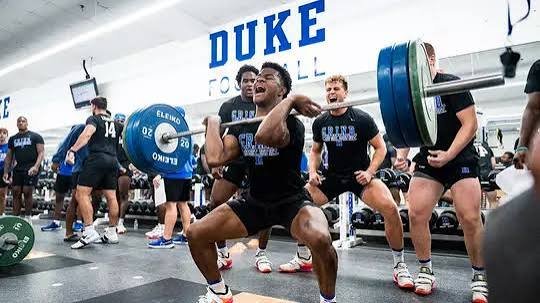
A College Football Player’s Workout Routine
Being a college football player takes a lot of work, especially when it comes to training and staying in shape. Players have to be strong, fast, and prepared for the physical challenges of the game. Working out is a big part of football because it helps players improve their performance and become better teammates. Training is not just about lifting heavy weights. It also takes discipline, consistency, and knowing how to take care of your body.
One important part of a football workout is strength training. Players spend time in the weight room doing exercises like squats, bench presses, deadlifts, and other movements that build strength. Different positions have different needs. For example, a linebacker needs strength to make tackles and take on blockers, while also having enough speed to move around the field. Strength training helps players become more physical and confident when competing.
Speed and conditioning are also important. Football players need to be able to run quickly, change direction, and keep moving throughout a game. Sprinting, agility drills, and conditioning exercises help improve these skills. Coaches often use drills that require players to react quickly because football is a game where decisions have to be made in a short amount of time. Being in good condition can help a player keep giving effort even when they get tired.
Another important part of training is practicing football skills. Players work on tackling, footwork, reading plays, and understanding their responsibilities. A workout in the weight room is useful, but players also need to know how to use their strength and speed on the field. Practicing with teammates helps build communication and trust, which are important during games.
Recovery is just as important as the workout itself. Players need enough sleep, water, and healthy food to help their bodies recover after hard training sessions. Stretching and following the coaching staff’s recovery plan can also help players stay ready for the next practice. Ignoring recovery can lead to fatigue and make it harder to perform well.
Being consistent is what makes a difference over time. Players do not become stronger or faster overnight. They have to show up, work hard, listen to their coaches, and keep improving. Some workouts will be difficult, but staying focused on long-term goals helps athletes push through challenges.
Overall, a college football player’s workout routine is about more than lifting weights. It combines strength, speed, conditioning, football skills, and recovery. All of these things help players prepare for competition and support their teammates. The work put in during the week can make a big difference when game day arrives.